
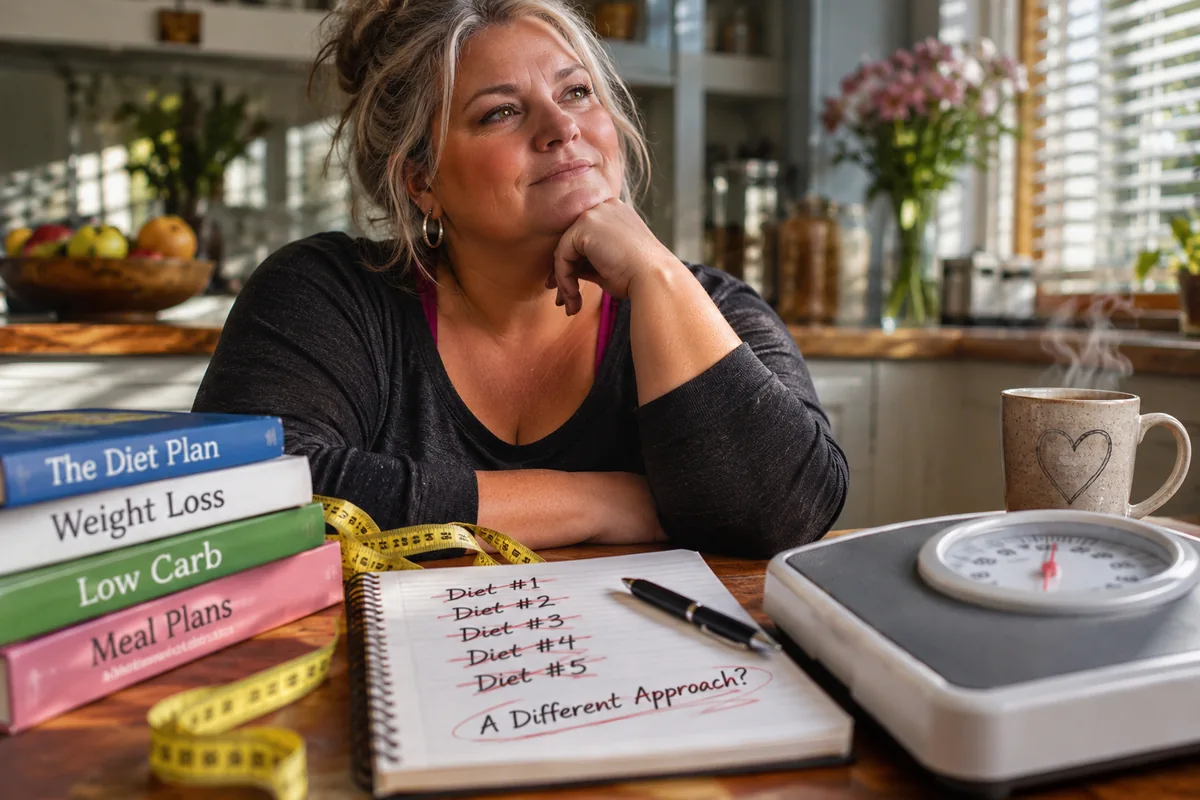
You know how to start a diet. What you want is a way of eating you can still live with when motivation fades, work gets busy, and someone brings cake. Gastric band hypnosis for weight loss may offer some people a useful way to practise those everyday choices with less struggle.
The encouraging stories are often about ordinary moments: leaving a little food, walking past the snack cupboard or enjoying an occasion without thinking about eating throughout it. Weight matters to the people telling these stories, but so does having more room in their lives for something else.
At Wellness Therapy By Pierre in Kleinmond, I see hypnosis as a tool for working towards agreed goals. Your willingness to participate matters. So does choosing an approach that fits your health, circumstances and preferences.
When starting again becomes exhausting
Repeated dieting can become tiring long before the next meal plan begins. There is the shopping, the separate cooking, the cost and the familiar worry about whether the weight will return. After several attempts, hope can feel expensive.
Weight regain involves more than determination. A University of Melbourne study found that changes in appetite hormones and increased hunger persisted a year after initial weight loss following a restrictive diet. That helps explain why maintaining change can require continuing support. Read the study.
Energy expenditure can also adapt during weight loss, although the size and persistence of that response vary. This does not mean every diet permanently damages metabolism or that regaining more than you lost is inevitable. Read the review.
What gastric band hypnosis actually involves
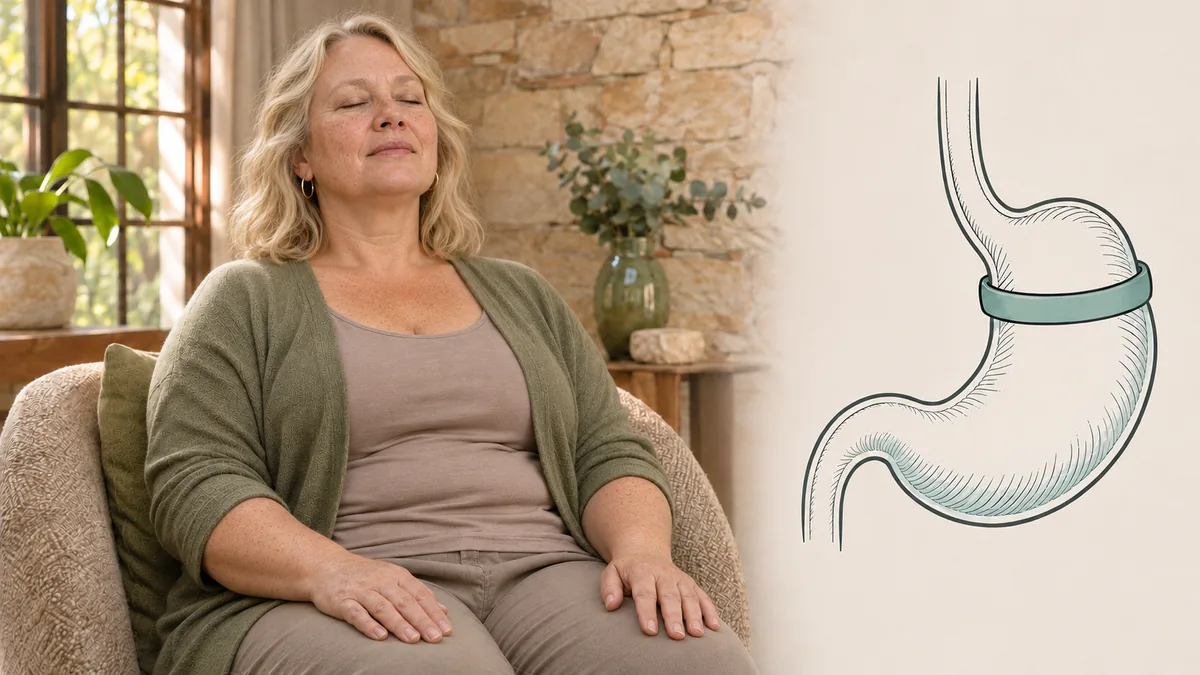
Gastric band hypnosis uses suggestion and imagery involving an imagined gastric band, usually within wider work on eating habits. There is no physical band and your stomach is not surgically reduced. The practical aim is to support different responses around food, such as noticing satisfaction or pausing before an automatic snack.
You might mentally rehearse eating more slowly, recognising when you have had enough or responding differently to a familiar trigger. What matters afterwards is whether those responses become useful in your daily life.
Hypnosis is not magic. It can provide a setting for focused practice, while the choices, adjustments and repetition continue outside the appointment.
A six-month programme with time to practise
My six-month weight loss programme includes nine group hypnosis sessions, with four to eight people in a group. The full programme costs R3,950 per person. This gives the work a longer setting in which to practise and discuss everyday changes.

I incorporate ideas from Brooke Castillo's approach alongside hypnosis. The intention is to help you understand familiar eating patterns and build responses you can use between sessions. Gastric band hypnosis can be discussed as a possible tool within your support, according to suitability. The two individual outcomes below are not presented as results from this group programme.
Two experiences from my own practice
I have used this approach with two clients who reported being happy with their results. One woman's weight reduced from 162 kg to 80 kg over eighteen months, a reduction of 82 kg. Another woman's weight reduced from 80 kg to 72 kg over twelve months, a reduction of 8 kg.
These are outcomes reported from my practice, not independently audited findings or a forecast for another client. The larger change is a substantial individual result and should not become somebody else's target simply because they have read about it.
The periods describe their weight journeys, rather than a promised treatment duration. Their starting points and results were different. An appropriate goal for you needs to belong to your own situation.
Smaller portions in a British client account
On Dr Bridget Freer's practice website in Hull, Anita describes losing five stone, approximately 31.8 kg, over six months after virtual gastric band hypnotherapy. Her testimonial, labelled as 2019, describes smaller portions and feeling less drawn to foods she had previously treated as forbidden.
Another client, Katie, wrote fifteen months after her appointment about feeling more comfortable in her clothes and being less preoccupied with weighing herself. Her account is valuable because it describes a change in daily experience, rather than simply another weight figure. Read the published accounts.
Progress reported by Australian practices
Annie Walker at Bathurst Hypnotherapy publishes Michelle McKinnon's account of losing 15.2 kg in fifteen weeks, followed by an update reporting 25 kg in twenty-seven weeks. Maureen's February 2024 testimonial describes losing 12 kg after starting in August or September 2023. She acknowledges gradual progress and a changed mindset towards food. Read the Bathurst testimonials.
At Flourish Hypnotherapy, Tracy Moane's practice presents Jacinta Cali's reported 18 kg loss through its virtual gastric banding programme. Flourish describes Kelly Maiden's improved control over sugar cravings and weight loss, without a numerical result. The page does not give a clear timeframe for Jacinta's loss. Read the Flourish stories.
Encouraging feedback from New Zealand
Stefanie Schaefer's Hypnosis Auckland website includes Janet's March 2019 follow-up, labelled three months after the programme, reporting that she had reached 15 kg of weight loss. Kath T.'s October 2019 account describes reaching her personal target within two months and sleeping better while using personalised recordings.
These accounts describe what those clients noticed. They do not establish how much another person will lose, or which part of a programme contributed most. They nevertheless give useful examples of changes that people found meaningful. Read the Auckland accounts.
A Christmas baking day that felt different
Kelly H., whose account appears on Shawn Liburdi's Georgia Hypnotherapy Associates website, reported losing sixteen pounds, approximately 7.3 kg, in eight weeks. That period included Thanksgiving, Christmas and New Year.
Her most memorable example concerns a family baking day. She described no longer grazing on ingredients, dough and finished biscuits as she had previously done. Smaller meals, less snacking and recognising fullness also featured in her account. Her account connects a reported result with a familiar situation. Read Kelly's experience.
What the positive stories have in common
Across these published accounts, recurring reported experiences include less snacking, more comfortable portion sizes, reduced preoccupation with food and increased confidence. These changes describe what an ordinary day feels like.
Perhaps the first useful change would be eating lunch without planning an afternoon of picking. Perhaps it would be enjoying a family meal without treating one dessert as the end of your intentions. Those are examples of possible goals, rather than additional client stories.
Commitment begins before the appointment
Being committed means being willing to take part, observe what happens and practise agreed changes. It does not require arriving with perfect habits or never feeling discouraged. Nor does a disappointing response prove that somebody did not try hard enough.
Before enquiring, choose one situation you would like to handle differently. Evening grazing, eating quickly or continuing after you feel comfortably satisfied gives the conversation a practical starting point. Write down when it happens and what tends to come before it.
You can also consider what you are ready to do between sessions. A small action you can repeat is more useful than an impressive plan that disappears by Thursday.
Preparing for a useful first conversation
Tell me what you have tried, what helped temporarily and what became difficult. Mention relevant health conditions, medication and any current support. This helps establish whether my non-medical hypnotherapy service is appropriate and whether another professional should be involved.
Discuss what the session involves, how you can pause and how progress will be reviewed. Ask about fees and the likely approach before committing to appointments. You should feel able to question a suggestion or say that something does not suit you.
How Brooke Castillo informs my approach
In If I Am So Smart Why Can't I Lose Weight, Brooke Castillo explores the thoughts, feelings and habits around eating. Ideas I incorporate include observing yourself with compassion, making decisions ahead of a difficult moment and building a manageable baseline of action.
For example, noticing the thought that a stressful day deserves an evening of eating gives you something specific to explore. You can acknowledge the need for comfort while considering how you want to respond. This is an illustration of the approach, not another client story.
Her writing informs my programme; it is not proof that a particular method will produce a particular weight loss. I believe working on these everyday patterns contributes to useful change, alongside participation in the hypnosis work.
Practising a pause around food
Consider an ordinary evening. You have finished supper and open the cupboard almost without noticing. Before deciding what to do, pause long enough to ask whether you are hungry, tired, restless or simply following a familiar sequence.
If you are hungry, an appropriate response may be to eat. If you are looking for a break, you might choose a different way to take one. The aim is to make the decision more deliberate, rather than turn every snack into a test of character.
In suitable hypnotherapy work, you might rehearse that pause and the response you want to practise afterwards.

Making portions comfortable and meals satisfying
Some testimonials describe feeling satisfied with smaller meals. The useful word is satisfied. The goal should not be to ignore hunger, compete over tiny portions or prove that you can eat as little as possible.
You could practise slowing down enough to notice your meal and checking how you feel before automatically taking more. Comfortable eating still needs adequate nourishment. A dietitian can help you find an approach suited to your health and preferences if that is difficult to judge.

Supporting your body while changing habits
Food quality, movement, sleep and appropriate healthcare remain relevant. Hypnosis does not replace them. A manageable eating pattern needs to supply the nourishment your body requires, rather than revolve around another period of severe restriction.
Protecting strength also deserves attention, especially as we grow older. A university-led trial in older adults with obesity found that programmes including resistance exercise preserved more lean mass during weight loss than aerobic exercise alone. Exercise still needs to suit the individual. Read the exercise trial.
Regular walking and movement you can sustain may fit everyday life more comfortably than punishing exercise bursts. Discuss suitable nutrition and activity with an appropriately qualified professional when health concerns or limitations make that necessary.
Handling a setback without abandoning everything
An unplanned meal gives you something to understand. It does not require writing off the rest of the week. Look at what happened without making it a verdict on your character.
Were you very hungry after skipping lunch? Did the plan leave no room for an occasion you wanted to enjoy? Was food doing the job of rest after an exhausting day? Choose the next ordinary meal or useful action, rather than compensating with extreme restriction.
Bring recurring difficulties to the next conversation. Adjusting the approach is part of taking the work seriously.
Noticing progress beyond the scales
Weight can be one measure of progress, alongside changes agreed with a suitable professional. You might also notice fewer automatic snacks, more comfortable meals or feeling less anxious about an invitation involving food.
Keep observations simple enough to use. Record what happened in one difficult situation and what you tried. Looking for patterns across time can be more informative than judging yourself after every meal. Continuing distress, dizziness, persistent weakness or problems with eating warrant appropriate assessment.
Give maintenance a place in the conversation
Ask what continuing support might look like once the first changes become familiar. Maintaining useful habits can involve different questions from getting started. Changes in work, caring responsibilities or health may call for adjustments. Review what remains helpful and what needs a different approach. Planning a review also gives you a clear opportunity to discuss costs before agreeing to more appointments.
Fees and support in Kleinmond
Individual hypnotherapy costs R1,200 per session. The six-month group weight loss programme costs R3,950 per person for nine group hypnosis sessions, in groups of four to eight. Discuss suitability and which format fits your circumstances before booking.
Wellness Therapy By Pierre is based in Kleinmond, serving the Overstrand in the Western Cape. Online hypnotherapy is available with reliable internet and suitable arrangements. Ask about group dates, session length, recordings and any additional costs.
Questions people often ask
Will hypnosis physically shrink my stomach?
No. Gastric band hypnosis uses an imagined band as part of suggestion and mental rehearsal. It involves no implanted device or physical alteration to your stomach. Its purpose is to support changes in eating responses.
How many sessions will I need?
There is no universal answer. Your concerns, response and agreed goals matter. Ask how progress will be reviewed and what the overall cost could be. Another person's weight loss timeframe does not determine your appointment schedule.
Can I have sessions online?
Online appointments are available with reliable internet and a private, comfortable space. Discuss your location, suitability and what happens if the connection drops. Online availability alone does not establish that this approach is right for you.
What if the weight has come back before?
That experience is worth discussing without embarrassment. Explore what supported earlier progress and what made maintenance difficult. Hypnotherapy may be one useful tool within a wider plan, with adjustments and other support where needed.
Choose a next step you can recognise
You do not need to promise a completely different life before asking for help. Begin with one change that would make an ordinary day easier. Less automatic snacking or feeling more comfortable stopping a meal can give the conversation somewhere useful to start.
If you are ready to participate in that work, WhatsApp Pierre on +27 82 822 1283 to ask about gastric band hypnosis for weight loss in Kleinmond or online. Tell me what you have tried and what you would like to do differently. We can discuss whether this approach fits your needs and a sensible next step.