
The diet usually doesn’t fail at breakfast. It fails at 9:47 PM.
You have eaten supper. The day is finally quiet. You make a cup of tea, open the cupboard and find yourself negotiating with a biscuit.
“Just one.” “I deserve something.” “I’ll start properly tomorrow.”
If that conversation sounds familiar, you already know why another list of foods may leave part of the problem untouched. Knowing what you intend to eat and following through in a tired, stressful moment are different skills.
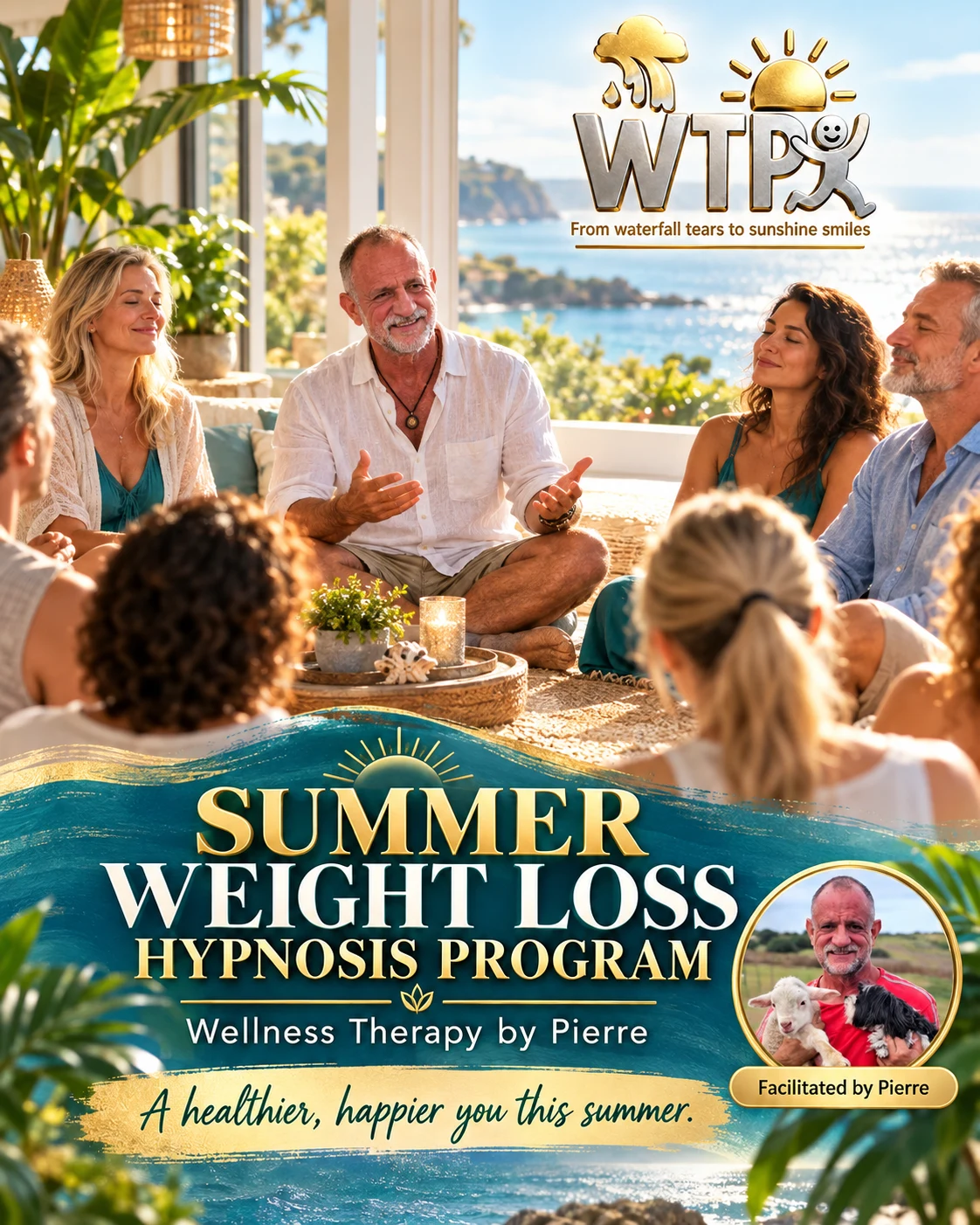
The Slimming for Summer Hypnosis Group, also featured in our Summer Weightloss Hypnosis Programme campaign, is an invitation to explore those moments with Wellness Therapy by Pierre in Kleinmond.

The principles behind my programme
The principles behind my weight-management programme draw on Brooke Castillo’s book If I Am So Smart, Why Can’t I Lose Weight? Tools to Get It Done! Her focus on emotional awareness, eating habits and deliberate choices informs my approach. Read the journal entry on Brooke Castillo’s ideas and my programme for the fuller explanation.
The five seconds before the snack
For one person, it is the television going on. For another, it is walking through the door after a difficult afternoon. For someone else, food becomes a small reward after looking after everybody all day.
Rather than treating every occasion as a failure of willpower, look closely at the sequence: the cue, the feeling, the sentence you tell yourself, and the action that follows.
- The evening cupboard visit: “I’m tired and I want something comforting.”
- The stressful afternoon: reaching for food before you have noticed how tense you feel.
- The television snack: eating automatically while your attention is elsewhere.
- The all-or-nothing thought: “I’ve had one biscuit, so I might as well give up today.”
These are examples to explore, not diagnoses. Hunger also deserves attention. Eating too little earlier in the day can leave you genuinely hungry later; an evening snack is not automatically a problem.
Hypnotherapy for weight management in Kleinmond
Hypnosis uses guided attention, imagery and suggestions linked to an agreed goal. In this campaign, the focus is the behavioural side of weight management: becoming more aware of triggers, working with habitual eating, and practising responses that better fit your intentions.
Possible goals to discuss include pausing before automatic snacking, responding differently to stress, staying engaged with realistic habits, and moving past the thought that one unplanned snack has ruined the whole day.
For example, “I want more self-control” can become a concrete goal: “When I finish supper and turn on the television, I want to notice whether I’m hungry before I reach for the snack bowl.” That gives us a specific moment to work with.
What hypnosis can realistically offer
Hypnosis does not melt fat or guarantee a particular number of kilograms lost. It can be considered as complementary support alongside nutrition, movement and appropriate healthcare. Results vary.
Research gives us a reason to be measured. A randomised trial of 120 people with severe obesity found no significant overall weight-loss advantage when self-hypnosis was added to lifestyle guidance, although some other outcomes improved. A small, three-week audio self-hypnosis trial also found no significant weight-loss effect. Neither study tested Pierre’s programme.
The aim here is to work with the habits surrounding eating. A useful starting point may be noticing a trigger earlier or making one more deliberate choice, rather than judging every effort by tomorrow morning’s scale.
A group conversation with room for your own goals
You may recognise your own pattern when somebody else describes the biscuit with coffee, the second helping at a braai, or the snack that follows a difficult phone call. Shared learning can make those patterns easier to talk about.
You can enquire about the group without committing. Ask Pierre what the sessions involve, how personal goals are handled in a group, what you may practise between sessions, and whether the format suits your circumstances.
Try one useful observation today
The next time you reach for food unexpectedly, pause long enough to ask: “What happened just before I wanted this?”
Notice the time, the situation, whether you feel hungry, and what you are hoping the food will do for you. There is no need to turn it into a trial of your character. You are gathering information about a pattern.
If you often feel unable to stop eating, experience significant distress around food, or have unexplained weight changes, speak to a registered healthcare professional. This non-medical wellness group does not diagnose or treat eating disorders.
Enquire about the Slimming for Summer Hypnosis Group
Wellness Therapy by Pierre is based in Kleinmond, with enquiries welcome from Hermanus, Betty’s Bay, Pringle Bay, Rooi Els and the wider Overstrand.
Message Pierre for the next group’s dates, fees, venue, session arrangements and availability. A conversation gives you the details you need before deciding.
Change the conversation before you change the plate.
Questions about weight-management hypnosis
Can hypnotherapy help with weight management?
It may support the behavioural side of weight management, including awareness of eating triggers and practising different responses. Research is mixed, and hypnosis does not guarantee weight loss. It is best considered alongside sensible nutrition, movement and appropriate healthcare.
Can hypnosis help with emotional eating and food cravings?
The group focuses on recognising triggers, habitual eating and the thoughts that precede a snack. Hypnotherapy may support this work, but responses vary. Frequent loss-of-control eating or significant distress deserves assessment by a registered healthcare professional.
Why do I snack in the evening when I am not hungry?
Sometimes a familiar cue, boredom, stress or the wish for a reward prompts eating. Physical hunger can also reflect not eating enough earlier. Start by noticing what happens immediately before you reach for food, without blaming yourself.
Will I lose control during hypnosis?
Hypnosis involves guided attention and suggestions. You remain able to respond, ask questions or stop. Read our introduction to what hypnotherapy feels like for more detail.
Where is the Summer Weightloss Hypnosis Programme available?
Wellness Therapy by Pierre is based in Kleinmond and welcomes enquiries from Hermanus, Betty’s Bay, Pringle Bay, Rooi Els and the wider Overstrand. Confirm the group venue and arrangements directly with Pierre before travelling.
What are the dates, fees and booking arrangements?
Contact Pierre on 082 822 1283 or WhatsApp to request the next group’s dates, session format, fees, venue and availability. Your place is confirmed directly with Pierre after the arrangements are agreed.
Learn more about what hypnotherapy feels like or explore our hypnotherapy services.
Research behind the measured approach
Bo and colleagues (2018): self-hypnosis added to lifestyle interventions
Antoun and colleagues (2022): audio self-hypnosis pilot trial
Non-medical complementary wellness support. Outcomes vary. Group dates, venue, fees and your place are confirmed directly with Pierre.