

Recent peer-reviewed research has examined hypnosis for chronic neuropathic pain, postoperative pain and caregiver stress. Although larger studies are still needed, the findings support the responsible use of hypnotherapy alongside appropriate medical, psychological and wellness care.[1–3]
At Wellness Therapy by Pierre, sessions are provided by a Certified Hypnotherapist with Internationally Accredited Training. Pierre’s hypnotherapy training is internationally accredited through the International Medical and Dental Hypnotherapy Association, the General Hypnotherapy Standards Council in the United Kingdom and the Association for Professional Hypnosis and Psychotherapy.
In-person hypnotherapy is available in Kleinmond, with online hypnotherapy offered to suitable clients across South Africa.
What is hypnotherapy?
Hypnotherapy uses focused attention, guided imagery, therapeutic suggestion and carefully selected techniques to support meaningful change.
During hypnosis, you are not unconscious or under another person’s control. You remain aware, can communicate and may stop the process at any time. Effective hypnotherapy is collaborative and shaped around your needs, goals and personal circumstances.
Depending on the reason for seeking support, a session may include:
- Guided relaxation and focused attention
- Therapeutic imagery and metaphor
- Self-hypnosis training
- Resource State work
- Parts Therapy and inner-conflict work
- Conversational and Ericksonian approaches
- Pain-management and coping suggestions
- Post-hypnotic cues to support continued practice
No two people experience pain, anxiety, stress, sleep difficulties or unwanted habits in exactly the same way. The hypnotherapy approach should fit the person rather than force the person into a standard script.
Hypnotherapy for chronic neuropathic pain
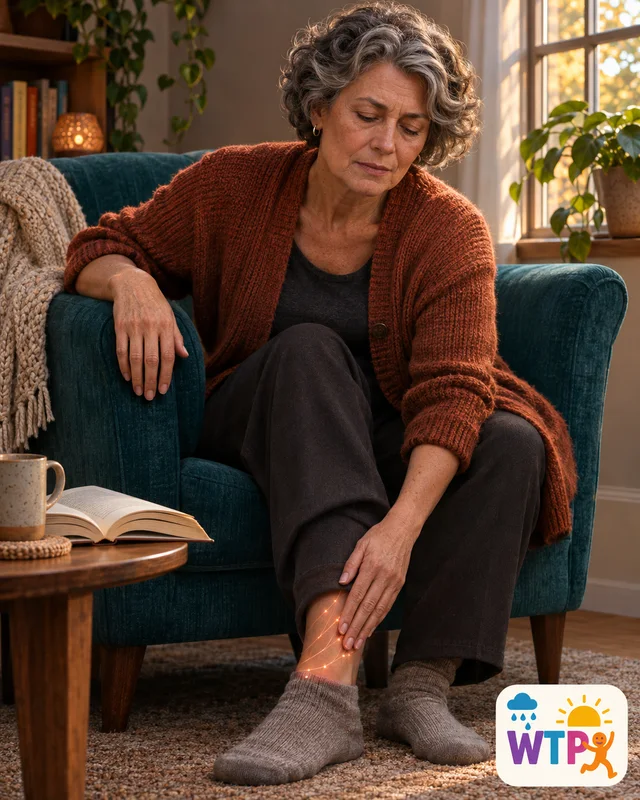
A randomised exploratory study examined hypnosis for 30 people living with chronic neuropathic pain.[1]
Participants received a structured five-session programme. One group attended all five sessions in person, while the other received three of the five sessions through telemedicine.
Pain scores improved in both groups. The average reduction was 2.7 points in the partly remote group and 2.2 points in the face-to-face group.[1]
Because this was a small exploratory study, it cannot prove that online and in-person hypnotherapy are equally effective. It does, however, show that a carefully structured hybrid hypnotherapy programme can be practical and accessible for people who find travelling difficult.
This is particularly relevant for clients who:
- Live far from a suitably trained hypnotherapist
- Experience pain or mobility difficulties
- Prefer private online hypnotherapy sessions
- Want a combination of online and in-person support
- Would benefit from learning self-hypnosis for home practice
For clients outside Kleinmond and the Overstrand, online hypnotherapy may provide a practical way to receive personalised support without unnecessary travel.
Hypnosis for postoperative pain management

A randomised feasibility study investigated hypnosis for 41 people undergoing elective bowel surgery.[2]
Participants received standard hospital care, with or without three additional hypnosis sessions. The sessions took place before surgery and during the first and third days of postoperative recovery.
The programme achieved:
- 90% participant retention
- 92.5% treatment adherence
- Immediate reported pain reductions after postoperative hypnosis sessions
- A promising early signal for reduced pain during the first 24 hours after surgery[2]
Participants reported median pain reductions of approximately two points after 24 hours and 2.5 points on the third postoperative day immediately following hypnosis.[2]
A larger trial is needed to determine the full effect on pain, recovery and medication requirements. Even so, the study shows that hypnosis can be introduced successfully within a structured hospital pain-management programme.
Preoperative hypnotherapy may also help a person:
- Prepare emotionally for a medical procedure
- Reduce surgery-related stress
- Practise calm breathing and focused attention
- Learn self-hypnosis before recovery begins
- Develop a greater sense of personal control
Hypnotherapy complements medical treatment. It does not replace surgery, prescribed medication, physiotherapy, psychological care or assessment by a qualified healthcare professional.
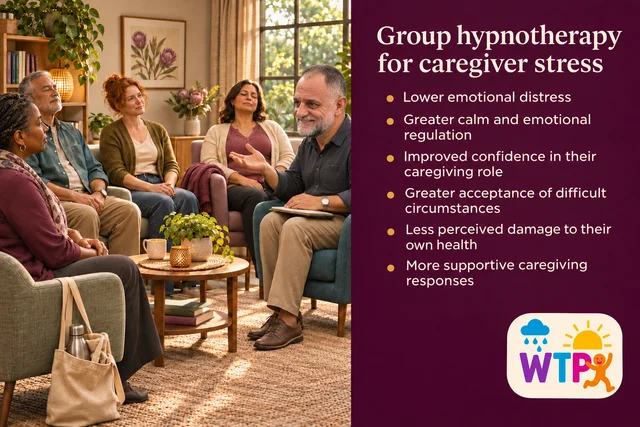
Group hypnotherapy for caregiver stress
Caring for someone with Alzheimer’s disease or another form of dementia can place considerable emotional and physical pressure on family members.
A recent peer-reviewed pilot study explored a structured group-hypnosis programme for dementia caregivers.[3] Sixty-five caregivers enrolled, and 56 completed six fortnightly group sessions.
Following the programme, participants reported:
- Lower emotional distress
- Greater calm and emotional regulation
- Improved confidence in their caregiving role
- Greater acceptance of difficult circumstances
- Less perceived damage to their own health
- More supportive caregiving responses[3]
This initial study did not include a control group, so it should be viewed as a promising starting point rather than final proof of effectiveness. The findings nevertheless support further research into hypnotherapy for caregiver stress, emotional exhaustion, grief and long-term coping.
What the research means for everyday hypnotherapy
The research points towards several useful principles.
Structured support matters
A planned series of sessions provides time to develop trust, introduce appropriate techniques and adjust the approach according to the client’s response.
Self-hypnosis extends the work beyond the session.
Self-hypnosis gives clients a practical skill they can use between appointments. It may support relaxation, emotional regulation, coping and continued engagement with agreed goals.
Online hypnotherapy can improve access.
A hybrid or online hypnotherapy programme may help clients who live far away, have limited mobility or prefer receiving support from home.
Personalisation remains essential
Scripts and techniques should be adapted to the individual. The person’s goals, language, beliefs, health, emotional readiness and preferences all matter.
Responsible hypnotherapy works alongside appropriate care.
Hypnotherapy can form part of a broader support plan. Where symptoms suggest a medical, psychiatric, neurological or physiotherapy concern, referral or collaborative care may be required.
Certified hypnotherapy in Kleinmond and online
Wellness Therapy by Pierre provides personalised hypnotherapy in Kleinmond for clients from:
- Hermanus
- Betty’s Bay
- Pringle Bay
- Rooi Els
- Fisherhaven
- Botrivier
- The wider Overstrand region
Online hypnotherapy consultations are available to suitable clients elsewhere in South Africa.
Pierre is a Certified Hypnotherapist with Internationally Accredited Training. His training is internationally accredited through:
- The International Medical and Dental Hypnotherapy Association
- The General Hypnotherapy Standards Council in the United Kingdom
- The Association for Professional Hypnosis and Psychotherapy
This training supports a professional, ethical and person-centred approach in which clients are treated with dignity, compassion and respect.
Screenshots from the South African Institute of Hypnotism’s training accreditation page.
What can hypnotherapy support?
People commonly explore hypnotherapy for support with:

- Stress and anxiety
- Chronic pain and pain-related distress
- Smoking and vaping cessation
- Sleep difficulties and insomnia
- Confidence and personal performance
- Emotional overwhelm
- Unwanted habits
- Grief and difficult life transitions
- Caregiver stress
- Relaxation and emotional wellbeing
Results differ from person to person. Hypnotherapy is not a guaranteed cure, and no responsible practitioner should promise a particular outcome before understanding your circumstances.
Begin with a free private discussion.
If you are unsure whether hypnotherapy is appropriate for you, begin with a free, private 20-minute introductory discussion.
This gives you an opportunity to:
- Explain what you would like help with
- Ask questions about hypnosis and hypnotherapy
- Discuss whether online or in-person sessions may suit you
- Understand the proposed approach
- Decide whether you feel comfortable proceeding
There is no pressure or obligation to book treatment.
Wellness Therapy by Pierre
Certified Hypnotherapist with Internationally Accredited Training
Hypnotherapy in Kleinmond and online
Serving Hermanus, Betty’s Bay, Pringle Bay and the wider Overstrand
From waterfall tears to sunshine smiles.
References
- Sourzac J, Salanne E, Francis-Oliviero F, et al. A Telemedicine Strategy for Hypnosis in the Management of Chronic Neuropathic Pain: A Randomised Exploratory Study. International Journal of Clinical and Experimental Hypnosis. Published online 28 October 2026. https://doi.org/10.1080/00207144.2026.2733271
- Toth A-M, Mackey P, Di Donato S, Alcacer-Pitarch B. Hypnosis for Postoperative Pain Management After Colectomies: A Single-Center Randomised Controlled Feasibility Trial. Diseases of the Colon & Rectum. 2026;69(11):2704–2713. https://doi.org/10.1097/DCR.0000000000004384
- Wawrziczny E, Traversac E, Picard S. A Group Hypnosis Intervention for Caregivers Confronted With Dementia: Results of a Pilot Study. Journal of Alzheimer’s Disease. 2026;114(1):326–340. https://doi.org/10.1177/13872877261487380