

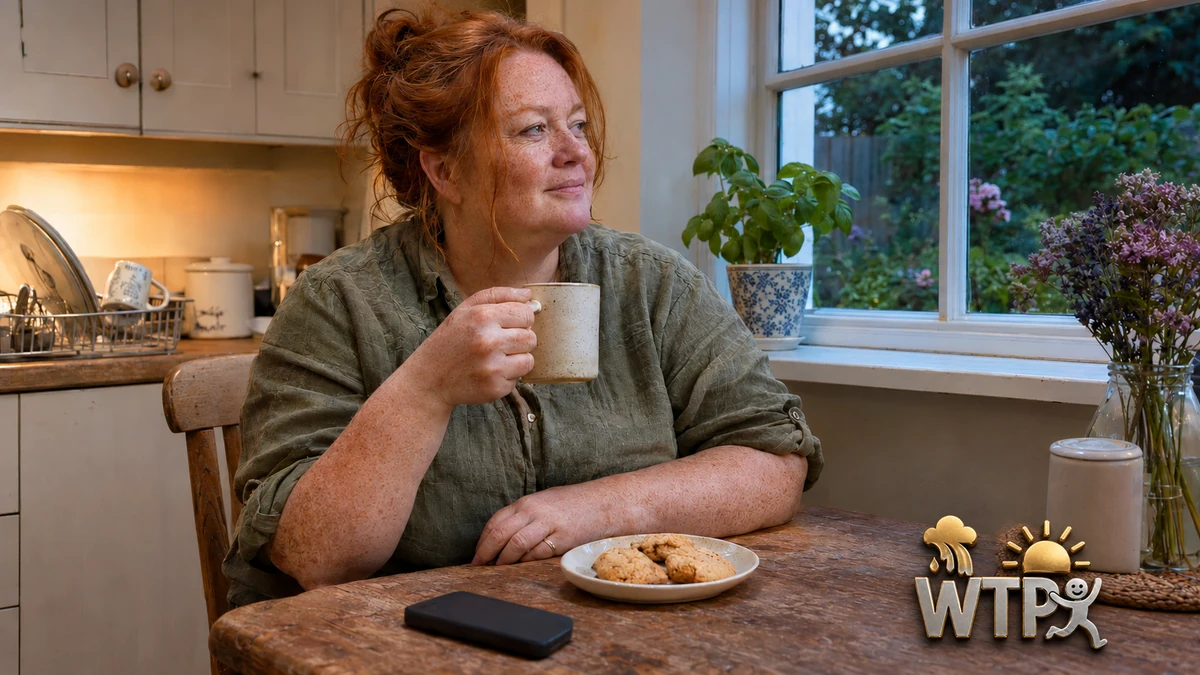
The house is finally quiet. You have finished supper, answered the last message and sat down for the first time all evening. A few minutes later, you are looking in the cupboard. You may want food. You may also want the feeling that the day has stopped asking things of you.
Evening snacking can involve hunger, familiar routines, a need for comfort or several things together. Hypnotherapy may offer a way to rehearse different responses, alongside practical changes that fit your needs. Understanding your particular evening gives that work a useful starting point.
My earlier articles explored gastric band hypnosis and returning to weight management after a setback. This week, we move a little earlier in the story. What happens before the snack becomes automatic, and what could make that moment easier?
Look at the evening before judging the eating
Consider an ordinary Tuesday. You have worked, dealt with shopping and checked on someone who depends on you. Supper happens around other people's arrangements. By the time you sit down, there is very little patience left for another decision.
In that setting, a biscuit can mean more than a biscuit. It may mark the beginning of your own time. The cupboard may be the first place you turn when you feel unsettled, or simply part of the route between making tea and switching on the television.
These are possible patterns to explore, rather than explanations that apply to everyone. Describe your own sequence before deciding what to change. The useful detail might be the late supper, the upsetting message or the feeling that you have had no room for yourself.
Check whether you need nourishment
Before calling an evening appetite emotional eating, consider what you have eaten and how the day unfolded. Perhaps lunch was hurried, a meal was missed or supper did not leave you comfortably satisfied.
You can be hungry and worried at the same time. A calming exercise cannot supply a meal. If you need food, eating appropriately remains part of looking after yourself.
Avoid making the pause into an exercise in refusing nourishment. Its purpose is to help you understand the situation. If judging hunger or organising adequate meals feels difficult, discuss your eating pattern with a registered dietitian who can consider your health and circumstances.
That conversation may reveal a practical problem that deserves a practical solution, such as food being unavailable when you arrive home.

Ask what the snack is doing for you
When food brings comfort, telling yourself to stop wanting comfort leaves an important question unanswered. What would you like that moment to provide?
Perhaps you want to unwind after being available to everybody else. Perhaps you miss having someone to talk to. Perhaps you enjoy the taste and have never given yourself permission to enjoy it without an argument afterwards.
Try completing one sentence: “At that time of the evening, I am looking for…” Keep the answer specific enough to recognise. “A quiet ten minutes” gives you more to work with than “I need to sort myself out.”
You may still choose to eat. Paying attention can help you decide whether you want the snack, some other form of support, or both. Food does not need to become an enemy for your choices to become more deliberate.
Find the cue you can recognise early
The most useful moment to notice may come before you open the packet. It could be turning off your work computer, hearing the kettle click or sitting in a particular chair.
Habit research describes how repeated actions can become linked to familiar situations. A review involving University College London researchers explains the importance of repetition and context when studying how habits form. It gives a reason to look at the circumstances surrounding a routine, rather than treating every repetition as a fresh failure of character.
Choose a cue you encounter often enough to observe. For example, “when I make my evening tea” is clearer than “when I feel tempted”. You can then prepare for an identifiable part of your day.
Give that moment one workable response
An intention such as “I will be better around food” offers very little direction when you are tired. A practical plan tells you when you will do something and what that action will be.
You might choose: “When I make my evening tea, I will check whether I need food and decide what I would enjoy.” Another option is: “When I close my laptop, I will take a short break before starting the household jobs.”
These are examples to adapt, rather than rules everyone should follow. Choose an action that meets a real need and is manageable in your home.
A Utrecht University review of twenty-three studies found that specific plans could support eating goals, with stronger findings for adding healthier foods than reducing unwanted eating patterns. Planning is useful to explore; it is not a guarantee that an urge will disappear.

Make some room for yourself before bedtime
If the evening snack is your only private moment, the rest of the evening deserves attention too. A workable change might involve protecting a little time before you become completely exhausted.
That could mean telling your household when you are taking a break, sharing a task or leaving a non-urgent message until tomorrow. Choose something realistic within your responsibilities. Caring for someone may limit your options, so practical help can matter more than another instruction to relax.
You might rehearse a short sentence: “I can help with that after I have had a few minutes to myself.” Notice whether saying it feels possible and what support would make it easier.
The aim is to give your needs a place in the day, rather than asking food to carry all of them at night.
How hypnotherapy can work with a familiar evening
At Wellness Therapy By Pierre, we can begin with a situation you want to handle differently. “I want to notice what I need when I sit down after supper” gives us a more useful focus than a demand to stop every craving.
Hypnotherapy uses focused attention, suggestion and imagery connected to agreed goals. In suitable work, you might imagine your own kitchen, the evening light and the familiar sequence around making tea. We could rehearse noticing your cue and practising the response you have chosen.
The scene should reflect your actual life. If you usually have grandchildren visiting or work irregular hours, those details matter. An imagined routine that depends on a perfectly quiet house may be unhelpful.
You can ask questions, express preferences and discuss stopping an exercise. Afterwards, the useful question is whether the rehearsal helped you attempt a different response outside the session. Your experience guides what we review together.
Keep the research connected to the goal
The French HYPNODIET trial discussed in my previous article studied adults with obesity and high eating disinhibition, meaning difficulty resisting eating cues. Participants receiving hypnosis alongside nutrition education improved on that behavioural measure compared with nutrition education alone. The difference in weight did not reach the conventional threshold for statistical significance.
This supports a careful conversation about eating behaviours in a selected population. It does not establish that hypnosis will stop everyone's evening snacking or predict a particular weight loss.
For your own support, agree what you want to practise and how you will recognise a useful change. A clearer eating decision is worth discussing in its own right, while weight and health goals need appropriate review.
Bring curiosity to the thought before the snack
Brooke Castillo's writing informs aspects of my approach, including observing thoughts with compassion and making some decisions before a difficult moment arrives. These ideas can help structure a conversation about familiar eating patterns.
Notice a sentence such as, “This is the only nice part of my day.” You do not have to argue yourself into believing that everything is wonderful. Ask what the sentence tells you about the day you have actually had.
Perhaps there was little enjoyment, too much responsibility or no opportunity to rest. A useful next step might involve changing one of those circumstances as well as discussing eating.
You can read more about Brooke Castillo's ideas and my programme. They inform the work; they do not establish a promised clinical outcome.
Let a chosen snack be an eating decision
If you decide to have something, consider how you would like to enjoy it. You might sit down with it and give yourself enough attention to notice the taste and how you feel.
For someone who eats while clearing the kitchen, the useful change may be recognising that they are eating at all. For someone who keeps returning to the packet during television, it may be deciding what they want before becoming absorbed in the programme.
Avoid turning this into another rule you can break. The point is to make your choice easier to notice and discuss. Some evenings will involve visitors, interruptions or different arrangements. Your plan should leave room for ordinary life.
Leave space for company and enjoyment
A quiet house can feel restful one evening and lonely the next. If eating often accompanies that loneliness, consider what kind of contact you would welcome.
An arranged telephone call or a regular activity may be more useful than telling yourself to stay busy. Choose company you enjoy and arrangements you can sustain. Hypnotherapy can support work on a response you want to practise, but it cannot provide companionship for you.
Likewise, enjoyment should have somewhere to live beyond achieving a weight goal. Reading, gardening or sitting outdoors might matter to you. Another person's list of worthwhile activities is less useful than something you would actually choose. Begin with an option that fits your present circumstances.
Prepare for evenings that look different
Visitors and holidays can change the timing and meaning of meals. You may find yourself eating later, sharing food more often or feeling uncomfortable declining another offering.
Think about one likely situation before it arrives. Perhaps you want to enjoy supper with family without continuing to eat throughout the conversation. Perhaps you need to ask about food arrangements during a long visit.
Rehearse a comfortable response, such as, “Thank you, I am enjoying chatting for now.” Your appetite and preferences can still guide the decision when you are there.
Preparation gives you something to return to when the surroundings change. It should support participation in your life, rather than make every invitation feel like a threat to your progress.
Notice the change you are practising
For a few evenings, record one short observation about your chosen cue. You might write, “I remembered to check what I needed,” or, “I was hungry because supper was too rushed.”
An observation is useful even when you ate differently from what you intended. It may show that your plan needs a different starting point or that something practical remains unresolved.
Keep the record simple and discuss it if tracking increases distress. You are collecting information for a conversation, rather than giving yourself a daily mark.
Bring the details to your next appointment. A specific evening makes it easier to decide what to continue practising and what deserves a different approach.
Make your first conversation useful
Before enquiring, write down one recent evening in ordinary detail. Include when you last ate, what happened before you opened the cupboard and what you hoped eating would provide. You can bring that description without presenting a complete history of your life.
Tell me about support you already receive and anything you want handled carefully. If previous hypnosis felt uncomfortable or unhelpful, explain what happened. A suitable approach should leave room for your questions and preferences.
Ask how we would agree a goal, what practice might be suggested between appointments and when we would review the response. Clarify the session format and fees before committing. A longer programme deserves the same questions as an individual appointment.
For group work, ask about confidentiality and whether you feel comfortable discussing your goals in that setting. You can describe a pattern without sharing every private detail.
An initial conversation also gives us a chance to recognise when another kind of support would be more appropriate. The aim is to help you make an informed decision about the work, with a clear understanding of what you hope to practise and how its usefulness will be evaluated in practice.
Know when you need additional support
Eating that repeatedly feels out of control, causes marked distress or involves compensating through vomiting or severe restriction deserves assessment by a registered healthcare professional. Explain what happens and how it affects your life.
Hypnotherapy should not replace assessment or appropriate treatment for an eating disorder. If weight management is part of your wider care, discuss how it fits with your treating professional. You can also raise medication questions or unexplained changes in appetite with your doctor.
Questions about evening snacking and hypnosis
Is every evening snack emotional eating?
No. You may need nourishment, enjoy a particular food or be following a familiar routine. Hunger and feelings can overlap. Understanding your situation is more useful than attaching a label immediately.
Will gastric band hypnosis shrink my stomach?
No physical band is fitted and your stomach is not surgically altered. Virtual gastric band hypnosis uses an imagined band within work on eating responses. Discuss whether that approach suits your needs.
What if I remember my plan afterwards?
That gives you something to review. Look for an earlier cue or make the response simpler. Discuss repeated difficulties so the approach can be adjusted to your circumstances.
Can we work on this online?
Online hypnotherapy is available for suitable clients with reliable internet and a private space. We can discuss your goals and practical arrangements before you decide whether to book.
Start with one evening you would like to change
You do not need to arrive with a perfect eating routine. Bring a description of the evening that keeps repeating and what you would prefer to happen within it.
At Wellness Therapy By Pierre in Kleinmond, serving the Overstrand and offering suitable online sessions, that can be the beginning of a practical conversation about hypnotherapy and weight management.
WhatsApp Pierre on +27 82 822 1283 to discuss your needs. Start with the part you find hardest. We can consider an agreed goal, the support that fits your circumstances and a manageable next step.
Kleinmond · Overstrand · Online
Talk through your own evening
A free 20-minute introductory discussion gives you space to ask about suitability, session arrangements and a practical starting point.
Explore a free introductory discussionHypnotherapy in KleinmondIllustrative images supplied by Wellness Therapy by Pierre.